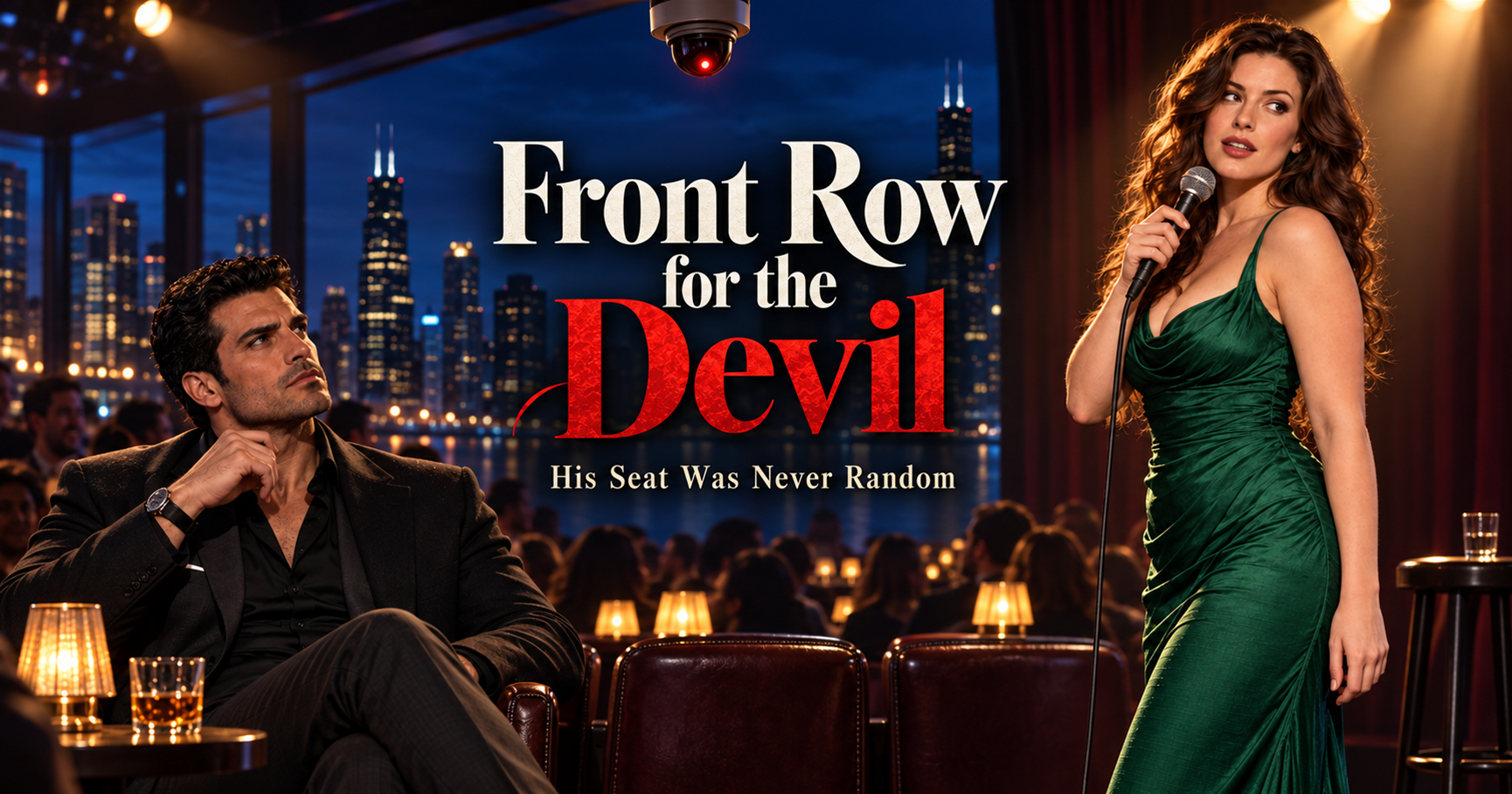
"Front Row for the Devil" Chapter 11 — No One Gets an Alibi Tonight
Chapter 11 — No One Gets an Alibi Tonight
The wall behind Julian Voss filled with his own history.
Login dates. Client indexes. Ticket alterations. Camera-route changes. Deletion requests. Each entry came from the read-only mirror he had authenticated with his password.
The console also captured the hardware token and device certificate from Voss’s tablet. Priya copied the session to the attorney’s evidence account while investigators watched. Nothing on the screen alone would convict him, but Voss had connected himself to the system in real time.
The stage lights rose.
Natalie walked in through the main doors with Enzo, Marcus, detectives, and two investigators from the state’s attorney’s office.
Voss pulled his hands from the console.
“You broke into my company’s system.”
“No,” Priya said from the booth. “You logged into ours.”
Voss looked for an exit. Officers stood at each one.
Natalie stepped onto the stage.
“Front row was never really your style, was it, Julian? You prefer the booth. Better view. Less chance anyone asks you a question.”
“This is another performance.”
“Then you know the rules. If you stand in the light, you might become material.”
She did not need a confession to every crime. She needed him to fix his knowledge to the record before his attorneys could separate him from it.
“The seating file for Enzo Caruso,” she said. “Was it created before or after Marcus logged in Friday?”
“After.”
Voss realized the mistake as soon as the word left him. The visible record showed Marcus’s login but not the hidden creation time.
“The Madison purge,” Natalie continued. “Did it fail because we changed the numeric code?”
“There was no numeric code.”
Another fact not displayed.
“Was Caleb Rusk’s credential copied before or after his death?”
Voss said nothing.
“Which camera placed Rachel Quinn at the lake?”
His gaze moved to the client index projected behind him.
“You have no proof I harmed that woman.”
“I did not say she was harmed.”
The room became very still.
Voss recovered quickly. “Everyone in this room arrived expecting a villain. You played an accusation and manufactured the context.”
“Then provide yours,” Natalie said. “Why did your system know Owen was alive at 11:43? Why did your technicians carry our stolen authentication module? Why did your credential redirect police away from Warehouse Nine tonight?”
He answered none of them.
Voss turned toward Enzo. “This man arranged all of it. He bought surveillance from me for years. He refused Rachel Quinn when she begged for help. He is using you to bury his own crimes.”
“Some of that is true,” Natalie said.
Enzo did not flinch.
She projected the phone record she had already published.
“Enzo refused Rachel’s meeting. He stayed silent because protecting his organization mattered more than protecting a woman in danger. He admitted it publicly, lost partners, and gave investigators the record.”
Natalie faced Voss again.
ADVERTISEMENT
“The truth does not require him to be innocent. It requires you to be accountable for what you did.”
Officers placed Voss under arrest on allegations connected to evidence tampering, obstruction, unlawful system access, and the investigation into Owen Price’s death. No one declared every case solved. The evidence would be authenticated, challenged, and argued over. Rachel’s death would be reopened. Caleb Rusk’s crash would receive a new review. The four alibi cases would be examined one by one.
Two Voss executives later agreed to cooperate. One identified the blond heckler as a contracted performer. Another authenticated the customer-index structure recovered from Madison Street. Their testimony did not make the footage infallible. It showed how the footage had been engineered.
Marcus gave a recorded statement with counsel present. He surrendered his accounts and communications. Prosecutors made no promise to erase his responsibility, only to consider his cooperation and the evidence he had preserved.
Sophie remained safe with her mother.
The gun recovered near Warehouse Nine proved to have been removed from old police evidence storage through a contractor whose access had been administered by Voss Civic Strategies. It no longer supplied the clean story Voss had built for it.
Enzo was not transformed into an innocent businessman by loving Natalie.
He closed the surveillance channels he had once purchased. He withdrew from two freight partnerships tied to Voss clients and lost control of a lucrative terminal contract. His attorneys negotiated his cooperation on the corrupt-access investigation without pretending his past had vanished.
Natalie refused interviews that wanted a simple redemption story. Enzo did not punish her for it.
They learned each other slowly, away from safe houses and crime scenes. Dinner where he did not choose her order. A late walk where his men remained a block back because she had asked. An argument he did not end by raising his voice or buying the problem. None of it erased who he had been. It showed who he was choosing to become.
When Natalie asked whether the losses frightened him, he said, “They should have frightened me when I was earning them.”
Three months later, The Lantern reopened under new recording rules.
No audience interaction could be sold, licensed, or submitted as verification without the performer’s and participant’s consent. Raw recordings were stored with independent timestamps. A portion of opening-night proceeds funded legal support for local journalists and whistleblowers.
The show honored Owen Price and Rachel Quinn.
Marcus did not manage Natalie anymore. He attended from the back beside his attorney and left before the reception. Forgiveness, Natalie had learned, was not the same as restored access.
The prosecutor had not promised Marcus freedom from consequences. His cooperation mattered. So did the years he had spent selling other people’s credibility. Natalie could wish Sophie safety without pretending her father had been innocent.
Priya controlled every camera from the booth.
Luca sat near the aisle with Princess, a seven-pound dog wearing a sweater that made his reputation impossible to recover.
And Enzo Caruso bought the center seat in the front row.
He arrived early.
Natalie walked into the light and waited for the applause to settle.
“You again?” she asked.
“I paid this time.”
“I checked.”
The audience laughed.
“The ticketing system emailed me three receipts,” Enzo said.
“Priya now believes redundancy is a love language.”
From the booth, Priya raised one finger without looking away from her screens.
She leaned toward him. The hard lines of his face had not disappeared. Neither had the danger around his name. But he met her eyes without asking her to soften what she saw.
“Do you enjoy suffering?”
“No.”
“Growth. Therapy finally worked?”
“I like knowing you’ll tell me the truth where everyone can hear it.”
For a moment, Natalie forgot the next line.
Enzo smiled.
She recovered before the audience could rescue her.
“Good,” she said. “Then let’s make sure nobody leaves with an alibi they didn’t earn.”