"The Key He Was Given: Two Missing Girls and the Evidence He Couldn’t Erase" Chapter 11: What a Key Can Destroy
Chapter 11: What a Key Can Destroy
The public record of the two cases could be arranged in boxes.
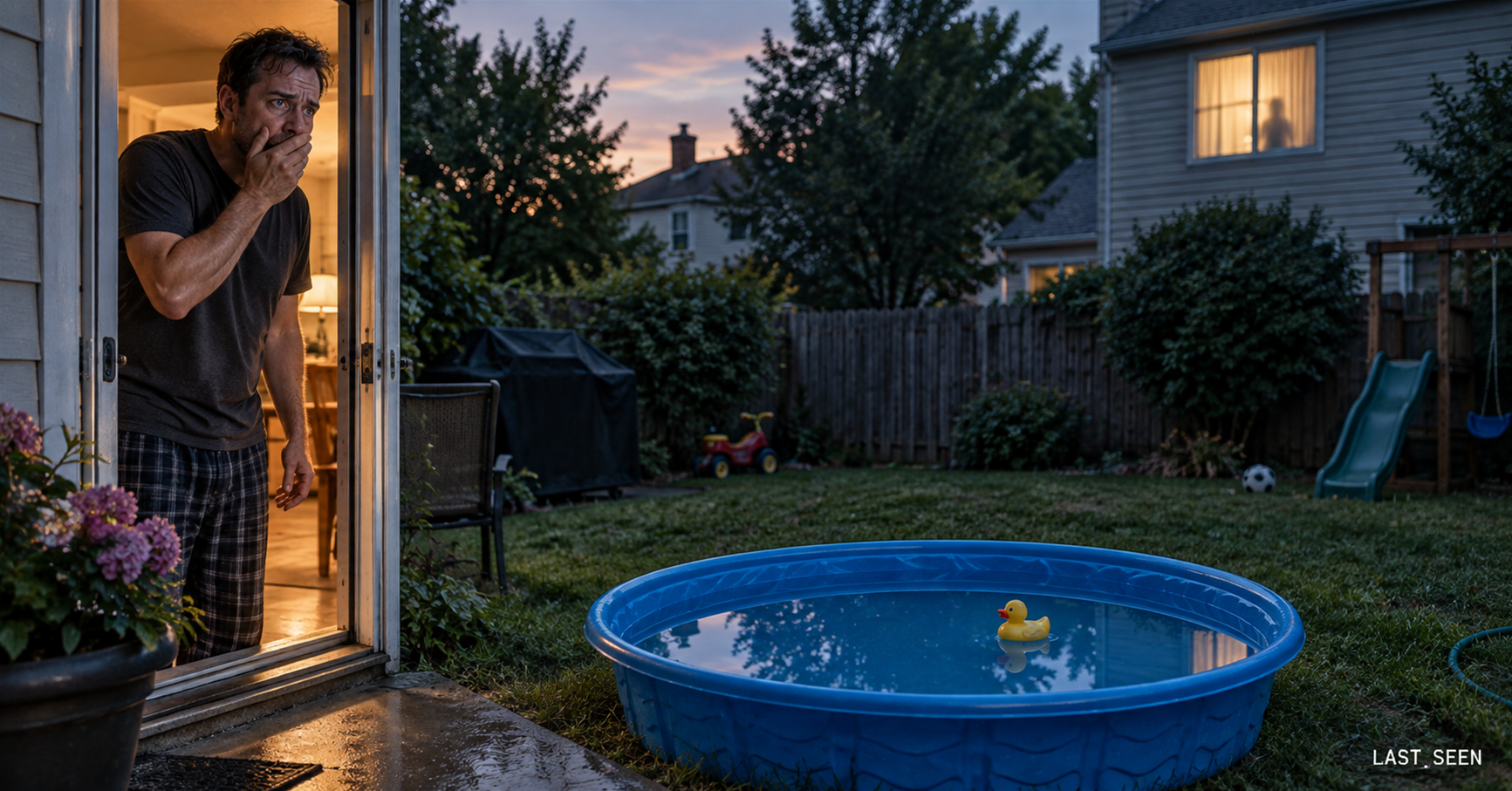
There was the first box: old neighborhood maps, search logs, Carl Dorr’s interviews, photographs of a plastic pool, and the correction that moved Michelle’s last-seen time from two-thirty in the afternoon to shortly after noon.
There was another: Penny Houghteling’s spare key, recovered reports from Laura’s bedroom, a pillowcase from the woods, a partial print, a notebook, receipts, a storage-unit inventory, and laboratory findings that linked a disguise to a false sighting.
Then came the records created years later: Jack Truitt’s notes, prison interview recordings, maps sealed during the cold-case review, recovery logs, and the evidence that brought Michelle home.
Paper made the story look orderly.
The lives around it were not.
Carl still woke early. Sometimes he stood in his kitchen before sunrise and looked toward the yard, even though the pool had been gone for years. He did not punish himself in the way he once had. That had taken time and help and the stubborn insistence of people who reminded him that shame was not the same as responsibility.
He had made a mistake on the day Michelle disappeared. He had fallen asleep and then lied about the time because he was afraid of what the truth said about him. That mistake had confused the investigation. It had not made him the person who took his daughter.
The distinction did not erase his grief. It allowed him to survive it.
Penny kept no spare key on the hook in her next house. Warren noticed it on the day she moved in. The empty hook had become part of her daily routine, a small absence she touched without thinking.
"You can take it down," he told her.
Penny shook her head. "Not yet."
She had stopped calling herself foolish. It had taken her nearly as long as it had taken Carl to stop treating himself as the case’s first suspect. Penny had given help to a person she believed needed it. The betrayal was not proof that kindness itself had been wrong.
Warren carried Laura differently. He talked about her at dinners. He corrected people when they reduced her to a headline. He told new members of the family about her work habits, her dry sense of humor, and the way she claimed she hated birthdays but always remembered everyone else’s.
"She was not a mystery," he said whenever the story began to drift toward the crime. "She was my sister."
Geoffrey spent years avoiding the old neighborhood. When he finally returned, he stood at the curb outside the house where his brother had once stayed. The building looked smaller than he remembered. A different family lived there. Children’s bicycles rested beside the porch.
He did not knock. He did not need to.
He had wanted a single moment he could revise: a different warning, a different decision, a different weekend. There was no such moment. What he could do was speak honestly about what he knew and what he did not, without letting his guilt become a way of stealing attention from Michelle.
ADVERTISEMENT
Detectives kept that same discipline. They did not call every strange drawing a map. They did not convert every statement from a convicted killer into a confirmed crime. Some leads ended in silence. Some names could not be connected to evidence. Those files remained unresolved, not solved by suggestion.
The distinction was not bureaucratic. It was moral.
Families deserved facts that could bear their weight.
In a small gathering arranged years after Michelle’s burial, Carl and Penny met for the first time. Warren came with Penny. Geoffrey came alone. None of them knew what they were supposed to say to people whose losses resembled their own without matching them exactly.
Carl broke the silence by talking about Michelle’s pool.
"She called it her ocean," he said.
Penny smiled through tears. "Laura hated getting her hair wet. She would stand under an umbrella if the forecast said rain."
Warren laughed softly. "That’s true. She carried one in her car every day."
For a while, that was enough. Not the offender. Not the evidence. Not the questions that had followed them into every room. Just Michelle and Laura as they had been when the world was still ordinary.
On the table between them lay no case files. There were photographs instead: Michelle in bright summer clothes, Laura smiling at a family dinner, people caught mid-laugh before anyone knew that a single afternoon or a single key could divide a life into before and after.
The investigations had taught everyone involved that truth did not arrive because it was deserved. It arrived because someone preserved a detail, corrected a lie, listened without embellishing, reopened a file, and refused to call suspicion proof.
The pool water had dried long ago. The key was an exhibit. The bedding, notebook, and maps had become numbered entries in controlled storage.
But Michelle Dorr and Laura Houghteling were not evidence.
They were remembered.
The years had changed what each family asked of the world. Carl no longer wanted people to look at him and decide whether he seemed innocent enough. Penny no longer wanted strangers to reassure her that she had been kind. Geoffrey no longer wanted a single sentence that could turn regret into innocence. Warren no longer wanted the news to stop saying Laura’s name; he wanted it said correctly.
They had all learned that memory required work. It meant correcting a casual lie at a dinner table. It meant refusing a headline that treated grief as entertainment. It meant answering a child’s question about an aunt or a cousin with a story that began before the crime.
Sometimes that work was small. Penny kept Laura’s favorite recipe in the kitchen drawer and made it on difficult days. Carl donated children’s books to a local library each summer in Michelle’s name. Warren saved every birthday card Laura had given him, not because he could not bear to let go, but because the handwriting reminded him that she had once been here, impatient and funny and entirely herself.
Geoffrey wrote a statement for the case archive. He did not try to make himself central. He described the deadline he had given Hadden, the weekend his family was away, and the facts he wished he had understood sooner. At the end, he wrote one sentence that Ellis later quoted when speaking about the case.
"A warning sign is not a verdict, but neither is family loyalty an excuse to look away."
The file would remain available to future investigators. They would see the early failure, the corrected clock, the chain of custody, the prison lead, the recovery, and the parts of the story that could never be proved. They would see, if they read closely enough, that the breakthrough had not come from a single dramatic revelation.
It came from people refusing to let uncertainty be rewritten as certainty.
ADVERTISEMENT
You May Also Like
-
CompletedChapter 11

The Girl the Tide Kept
When four-year-old Mara Vale vanishes from a beach changing room, her eight-year-old brother, Eli, spends the rest of his life believing he failed her. Thirty-eight years later, a cold-case detective finds an unfiled teenage confession hidden in an archive box. It contains one detail nobody outside the family should know: the silver crescent Mara had drawn on the corner of her blue towel. Eli and Detective Nora Bell follow the confession back to a vanished marshland, a buried road, and a development built over the place where the truth may have been erased. But when the case finally reaches court, the evidence that could name Mara’s killer may be the one thing the jury is never allowed to hear.Human Nature|Arranged Marriage9.1k words5 0 -
CompletedChapter 8
The Fire Behind the Blue House
Before dawn, a blue house on Harbor Street goes up in flames. Inside, retired marine electrician Arthur Bell is found dead. Outside, detectives find Erin Kessler—barefoot, bloodstained, and carrying the key to his home. Erin insists she has nowhere to live and no reason to hurt him. But every answer she gives changes the story: she never knew Arthur, then he was her employer, then she only stayed in his house sometimes. As Detective Mara Vale follows a trail of burned fabric, a hidden notebook, and footage the fire failed to destroy, she discovers that the truth behind the blue house is more heartbreaking than anyone expected.Human Nature4.5k words5 0 -
CompletedChapter 11
The Wedding Toast That Buried Them
Four weeks before her wedding, family-law attorney Emma Hart sees her fiancé kissing her younger sister outside a roadside motel. Instead of confronting them, she preserves the evidence, protects her assets, and waits. Then her sister takes the microphone at the wedding and announces that she is carrying the groom’s baby. But when Emma’s mother demands forgiveness, she awakens a twenty-two-year-old secret powerful enough to destroy far more than one marriage.Human Nature|Glow-Up11.2k words5 0 -
CompletedChapter 11
She Raised Her Golden Daughter on My Inheritance
Emma spent eighteen years being told she was lucky anyone wanted her. Then her biological mother returned with proof: Emma's adoptive parents had received $8,000 a month for her care while forcing her to work—and they had built their golden daughter's life with the money. When Emma discovered a $2.4 million trust in her name, her adoptive father disguised an asset transfer as a wedding loan. He wanted her signature in front of 120 guests. Emma gave him the stage. She just didn't give him the ending he expected.Human Nature11.2k words5 0 -
CompletedChapter 11
The Girl Who Gave the Devil a Flower
Adrian Vale is the man powerful people refuse to look in the eye. At a glittering lakeside wedding, every chair near him remains empty—until four-year-old Lucy Ellis walks straight across the ballroom, tells him he looks lonely, and places a bruised white flower in his hand. Then Adrian notices the wooden swallow around her neck. It bears the unmistakable mark of Samuel Reed, the mechanic who once rescued a homeless teenage boy and gave him a place to land. Samuel is gone now. The exhausted banquet worker searching for Lucy is his daughter, Mara—and she wants nothing from the dangerous man her father once saved. But someone else has noticed Adrian's new weakness. To protect Mara and Lucy, he may have to surrender the empire that made everyone fear him. And Mara must decide whether a man built by violence can truly choose a different life—or whether accepting his protection will cost her the independence she fought so hard to keep.Human Nature11.3k words5 1 -
CompletedChapter 11
My mother-in-law put something in my drink during a family dinner; I swapped glasses with my husband.
My mother-in-law slipped something into the drink she made “especially for me.” I saw her do it. So I switched glasses with my husband. Forty-five minutes later, he collapsed—and she begged me not to call 911. The hospital found a prescription sedative in his system. My husband left me. My father-in-law offered me $200,000 to stay silent. Then an anonymous message arrived: This wasn’t the first glass she tampered with. I found the original security footage. But when I brought it to their house, my mother-in-law had already called the police—and accused me of drugging her son. She thought the first person to tell the story would be believed. She forgot I had preserved the glass.Human Nature12.2k words5 0 -
CompletedChapter 11
My husband disappeared in 2005. On my birthday, I received a card that said "LOOK IN THE BASEMENT."
For twenty years, Eleanor Carter believed her husband had died in the river. Then a birthday card in his handwriting led her to a hidden wall—and proof that he had buried one family to build another.Human Nature11.5k words5 0 -
CompletedChapter 11
He Laughed When I Resigned—Until He Read My Letter and Went Pale!
My father-in-law gave my promised promotion to his niece after eight weeks—then ordered me to train her. He told her I was forty-one, married to his son, and too afraid to start over. So I placed my resignation letter on his desk. He laughed before opening it. By the final line, his face had turned pale. “You can’t leave. She isn’t ready.” “Then you promoted the wrong woman.”Human Nature11.9k words5 0 -
CompletedChapter 11
The Wife He Never Saw
For three years, Willa Hart Vale has lived in the shadow of Celeste Rowan, the first love her husband believes died in a plane crash. Adrian chooses Celeste’s grieving family for every holiday, every emergency, and every moment that should belong to his wife. Then Willa is diagnosed with Stage IIIA breast cancer. She tells Adrian three times. He hears her—and still chooses Celeste’s memorial over Willa’s surgery. But Willa has stopped begging to be seen. Before entering the operating room alone, she files for divorce, removes Adrian from her medical decisions, protects her parents and her work, and schedules one final email. At noon, Adrian will learn the truth about the wife he ignored. And when the woman he mourned suddenly returns alive, he will discover that some choices cannot be undone.Human Nature|Glow-Up|Second Chance11.6k words5 0 -
CompletedChapter 11
After my husband's funeral, my son took me to a deserted road and said:
The morning after Elaine Mercer buries her husband of forty-three years, her adult children arrive at the kitchen table dressed for a business meeting. They already have a retirement community chosen for her, a developer offering $6.8 million for the family orchard, and documents claiming their dying father transferred control before his death. Then Elaine sees the signature. On the date Thomas supposedly signed, he could barely hold a spoon. Elaine hides her suspicion and agrees to visit the retirement community. Instead, her son drives her to an isolated gravel road, sets down a suitcase, and orders her out of the car. Grant thinks he has taken her home, her business, and her last chance to resist. He does not know what Elaine placed in her handbag before leaving the farmhouse: the original deed to eighteen acres purchased before her marriage—land containing the reservoir, pump house, and access route the entire development needs. Abandoned, grieving, and underestimated, Elaine begins walking toward town. What follows is not a loud revenge story, but a calculated fight over forged documents, hidden debt, family betrayal, and the true value of the life she helped build.Human Nature11.5k words5 0