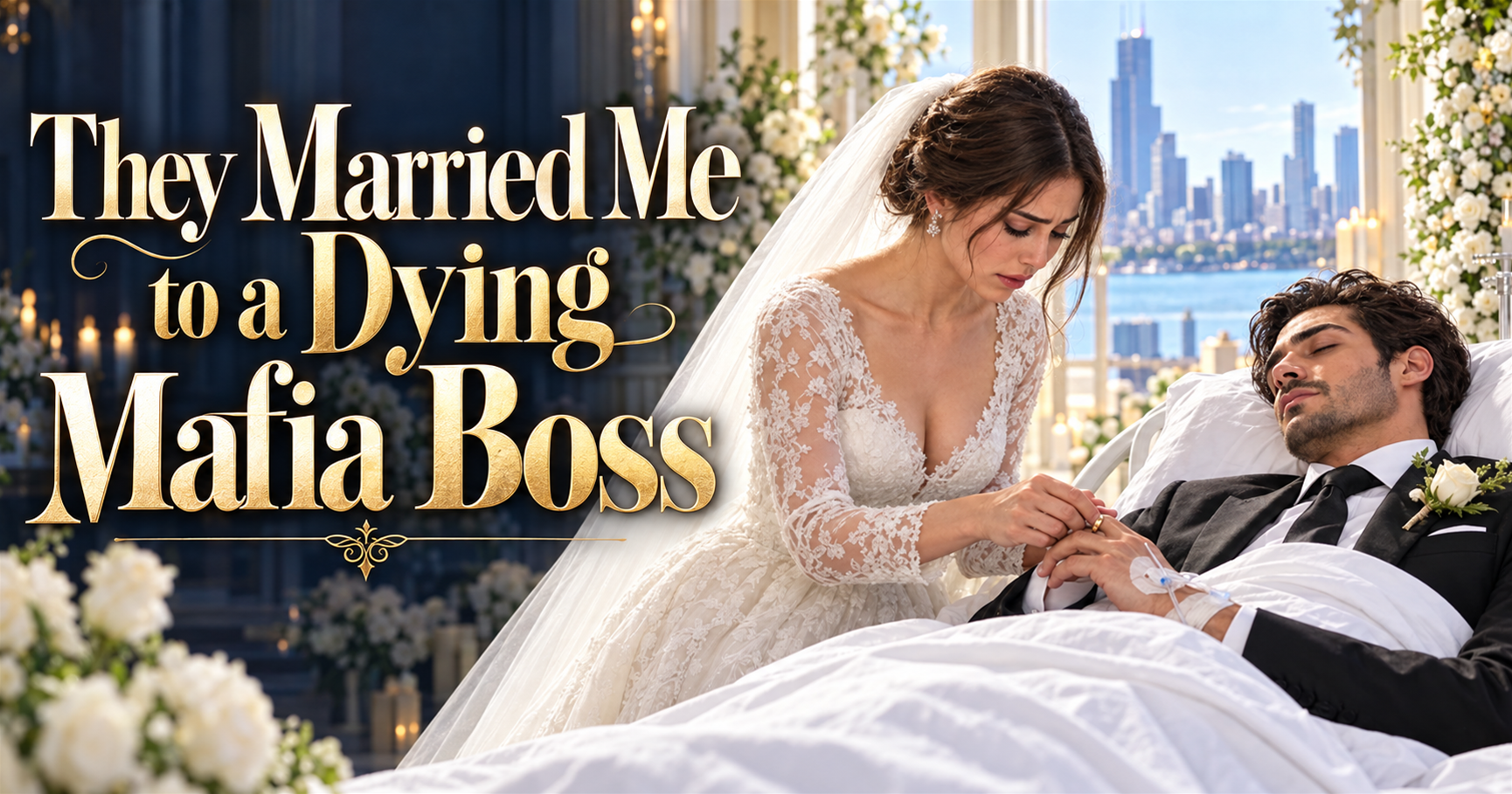
"They Married Me to a Dying Mafia Boss" Chapter 2 — One Answer
Chapter 2 — One Answer
I waited until the door closed before I let myself shake.
Then I pulled the chair closer to Adrian’s bed.
“Harlan’s wrong about one thing,” I told him. “Martin Shaw wasn’t my last patient.”
After Martin died, I had worked six more shifts while the hospital investigated. I had cared for a teenage boy after a car crash, an elderly woman recovering from surgery, and a man whose wife sat in exactly the chair I occupied now.
Then security escorted me out.
Harlan had reduced my entire career to the one death he’d pinned on me.
I opened my old notebook.
On the first blank page, I wrote the date, the time, and his exact words.
Beneath them, I wrote what I had actually seen.
No guesses.
No conclusions.
A nurse named Beth returned with a meal tray.
“Mr. Briggs said you hadn’t eaten.”
“Thank you.”
She was younger than me, with tired eyes and a wedding band on a chain.
“How long have you worked here?”
“Six weeks.”
“Did you know him before the accident?”
She shook her head.
“Does Harlan ever bring in another specialist?”
Her attention flicked toward the camera.
“You should ask him.”
I let the question go.
“Could I help wash Adrian’s face later? Just ordinary personal care.”
Beth hesitated.
“I can show you what’s comfortable for him.”
We did it together.
She explained the equipment, although I already understood it. I listened without correcting her. When she stepped away for clean towels, I told Adrian what I was doing.
“I’m going to wipe your cheek. The cloth is warm.”
There was no obvious response.
But his breathing changed briefly when I spoke.
That could mean nothing.
I wrote it down anyway.
At eleven, Beth handed over to the night caregiver. At twelve seventeen, Harlan returned.
I had turned the lamp low and folded myself into the chair with a blanket. Through nearly closed eyes, I watched him examine the monitor.
He opened his bag.
Prepared something.
Administered it through the line.
Then he left.
The caregiver had been in the adjoining room.
When she returned, I sat up.
“Did Dr. Harlan change anything tonight?”
She looked surprised.
“He handles his own orders.”
“Will it go in the chart?”
“He usually updates it in the morning.”
I nodded as though that satisfied me.
At breakfast, the entry still wasn’t there.
I noted that too.
By the second evening, Briggs had begun appearing at the door whenever I asked a question.
“You’re making the staff nervous,” he said.
“I’m asking what’s being done to a man who can’t ask for himself.”
“They’re afraid of being blamed.”
“So am I.”
That stopped him.
He looked older in the lamplight.
“You don’t understand this house.”
“Then explain it.”
He glanced down the corridor before closing the door.
“Mr. Voss used to know about a problem before anyone admitted there was one. Now everyone walks past him and discusses things they would never have said in his presence.”
ADVERTISEMENT
“Does that bother you?”
“Yes.”
“Enough to answer a question?”
His jaw worked.
“Which question?”
“Was he always like this after the accident?”
Briggs pulled the other chair away from the wall.
“No.”
I kept my pen still.
“In the hospital, there were days he opened his eyes,” he said. “Once, his sister called his name, and he turned toward her.”
“Where is his sister?”
“Dead. Two years before the accident. I meant a recording. She used to leave him messages.”
He rubbed his hands together.
“I played one. The hospital doctor thought his response mattered.”
“What changed?”
“Julian brought him home. Dr. Harlan took over.”
“Did anyone question why he stopped responding?”
“I did.”
“What were you told?”
“That improvement isn’t always permanent. That I was seeing what I wanted to see.”
I knew how effective that sentence could be.
“Do you still have the hospital doctor’s name?”
“Dr. Isabel Reyes.”
I wrote it down.
Briggs stood abruptly.
“I shouldn’t have said any of this.”
“Walter.”
He stopped.
“I’m not asking you to accuse anyone. I’m asking you to remember what happened.”
He left without answering.
That night, I spoke to Adrian about my mother.
Not because I expected a response. Because it was easier than sitting in silence beside someone everyone else had already abandoned.
“She used to make me call when I got home, even after I moved out. Now she sometimes asks if my mother knows where I am.”
I adjusted the blanket at his shoulder.
“Yesterday she thought I was one of the nurses. She thanked me for visiting.”
My voice caught.
“I said she didn’t have to thank me.”
I looked toward the camera and wiped my face.
“I’m sorry. You probably get enough crying in here.”
Something shifted beneath the blanket.
I stopped.
His right hand rested near his hip.
I waited, staring.
Nothing.
A muscle twitch. A movement of fabric. My own exhaustion.
I reached for the call button, then paused.
If I reported it, Harlan would be the person deciding what it meant.
Instead, I moved the blanket away from Adrian’s hand.
“Adrian?”
The monitor continued its rhythm.
“If you can hear me, I’m going to put my finger against your hand.”
I did.
“You don’t have to lift your arm. Just try to press.”
For several seconds, nothing happened.
Then the side of his index finger pushed against mine.
Barely.
I withdrew my hand.
My heart was beating so hard I could hear it.
“Let’s try something different. When I say now, try again.”
I waited.
“Now.”
A faint pressure.
I sat back, afraid to trust it.
Then I tried once more, leaving a longer silence before the instruction.
The movement came afterward.
Not before.
I pressed my free hand over my mouth.
For two nights, I had been speaking into a silence.
Someone had been listening.
The door opened.
Briggs entered and saw my face.
“What happened?”
“Come here.”
I repeated the instruction.
This time Adrian didn’t move.
Briggs waited beside me.
I tried again, then stopped.
“We shouldn’t exhaust him,” I said.
The older man looked at the hand lying between us.
“What did you see?”
“I felt a response more than once. After I asked.”
His eyes filled.
“Don’t tell Julian,” I said.
He looked at me sharply.
“We need someone independent to evaluate him first.”
Briggs nodded slowly.
“I’ll find Dr. Reyes’s number.”
Before he left, he leaned toward Adrian.
“I’m sorry, sir.”
The next afternoon, Julian arrived carrying a thin folder.
He set it on the bedside table, directly over my notebook.
“Some routine paperwork.”
I opened it.
The first page described me as Adrian’s devoted wife.
The second asked me to affirm that I supported his existing care plan.
The third said I would not seek an outside assessment without prior coordination through Julian’s office.
I read that sentence twice.
“Why do you need this?”
“Because family disputes can interfere with treatment.”
“I haven’t disputed anything.”
His gaze settled on my notebook.
“Good. Let’s keep it that way.”
He placed a pen on top of the folder.
“Sign it before noon tomorrow, Nora.”
“And if I have questions?”
Julian smiled.
“Your mother’s next payment is due tomorrow too.”
ADVERTISEMENT
You May Also Like
-
CompletedChapter 10

Her Family Stole My Father’s Legacy. I Bought Theirs
Victoria Delacroix slapped me in front of thirty wealthy guests and ordered security to throw me out. She thought I didn’t belong in her family’s luxury boutique. She didn’t know I already controlled the company. One phone call ended her evening. An old sketchbook changed everything I thought I knew about my father. He was a Black tailor from Queens who died believing his greatest opportunity had ended in failure. But the designs that made the Delacroix name famous carried his handwriting. Her family had taken his work, denied him payment, and erased his name. Now her father was offering me two million dollars to keep it that way. He should have asked what I wanted before putting a price on my silence.Human Nature|Glow-Up9.8k words5 0 -
CompletedChapter 11
I Owned the Hotel That Turned My Daughter Away
Ethan Vance arrives at a luxury hotel carrying his sleeping daughter and a crushed bouquet of roses for his late wife. The receptionists see his wet jacket and decide he doesn’t belong. They refuse to help. They dismiss the housekeeper who offers his daughter a blanket. They have no idea he owns the hotel. One phone call exposes their mistake. But before Ethan can take his daughter upstairs, the manager produces an envelope in his dead wife’s handwriting—addressed to Ethan and the housekeeper he has just met. He came to remember the woman he loved. Now he must discover the part of her life she never shared.Billionaire|Human Nature|Dark Secrets11.7k words5 0 -
CompletedChapter 10
They Thought I Couldn’t Afford to Quit.
For nine years, Catherine “Cat” Bennett kept the clients happy, the projects moving, and her shrinking team afloat. Then HR offered her a sixty percent pay cut. Same accounts. Same responsibilities. Less than half the salary. Her boss knew she was a single mother. He knew she had a mortgage and a son who needed asthma medication. He expected her to sign. Cat cried in her car instead. Then a former colleague called. Their biggest competitor had been trying to recruit her for years—and its CEO wanted a meeting. By the time Cat returned to give HR her answer, she had a signed offer in her bag. Her boss had prepared for an employee who couldn’t afford to leave. He hadn’t prepared for what losing her would cost.Dark Humor|Human Nature|Age Gap9.7k words5 5 -
CompletedChapter 10
The Barefoot Boy Who Helped My Daughter Stand.
For three years, Nathaniel Hayes has searched for a way to help his daughter walk again. Then, at an elegant family celebration, nine-year-old Lily takes the hand of a barefoot boy—and rises from her wheelchair. Nathaniel is stunned. Lily’s grandfather wants the boy removed. But ten-year-old Noah Bennett hasn’t come looking for money or a miracle. He recognizes something in Lily that the adults around her haven’t understood. As an unlikely friendship brings laughter back into the house, Lily begins talking about the accident that killed her mother. And someone in the family has a reason to wish she’d stayed silent.Billionaire|Human Nature|Dark Secrets10.2k words5 6 -
CompletedChapter 10
The Man I Kept in Chains Came Back for Me.
Julian Ashford once had enough money to keep Adrian Mercer in chains—and too little understanding of love to know why he wanted him to stay. Then Adrian destroyed his family’s fortune and waited for the spoiled young heir to come begging. Julian never did. Five years later, Julian delivers food through freezing rain, counts every dollar, and avoids the powerful man who ruined him. Adrian says he hates him. Julian believes him. But hatred doesn’t explain the car that follows him everywhere. The familiar candy beside his medicine. Or why Adrian keeps reaching for him after telling him to leave. Julian wants to call it even and move on. Then another man kisses him. That night, Adrian appears outside his door.Human Nature|Healing Romance|HE6.8k words5 0 -
CompletedChapter 11
The Dancer They Paid to Humiliate
Emily Carter was hired to dance at a billionaire's charity gala. Instead, she became the evening's biggest joke. As wealthy socialites mocked her curves and laughed behind champagne glasses, Emily refused to stop dancing. But when a mysterious necklace slipped from her dress, billionaire Alexander Whitmore suddenly rose from his chair and shouted, "STOP THE MUSIC!" That necklace belonged to a Whitmore heiress who vanished decades ago. Now, the woman everyone humiliated may hold the key to...Billionaire|Human Nature|Dark Secrets|Plot Twist|Glow-Up12.3k words5 8 -
CompletedChapter 124
I Died on My Wedding Night. My Enemy’s Hair Turned White.
I loved Julian Whitmore for nineteen years. On the night we made our marriage official, he murdered me for the heart beating in my chest. Death should have ended the betrayal. Instead, I became a ghost, forced to watch my husband play the grieving widower while my family helped bury the truth. I could see everything. Prove nothing. Touch no one. Then Lucian Blackwood began looking for me. My ruthless business rival. The man I had spent years fighting. The last person I expected to care whether I lived or died. While the people I loved profited from my disappearance, he refused to stop searching. And every secret I uncovered about him made my wasted life hurt more. I wanted revenge. I wanted my mother safe. But the closer Lucian came to the truth, the more frightened I became of what finding me would cost him.Human Nature|Dark Secrets82.6k words5 17 -
CompletedChapter 10
The Woman They Shouldn’t Have Slapped
Vivian Whitmore looked at the elegant Black woman standing in her father’s boardroom and decided she didn’t belong. First came the questions. Then the insults. Then Vivian slapped her in front of everyone. Amina Diop didn’t slap her back. She picked up her phone. “Hold tomorrow’s funding release.” Vivian had no idea she had just struck the founder of Diop Capital—the firm her family’s company desperately needed. But Amina had come to that meeting with questions of her own. Millions of dollars were unaccounted for. Someone had been approving payments for work nobody could produce. And the man standing beside Vivian had just recognized her. He looked terrified. Not because of the slap.Human Nature|Dark Secrets7.6k words5 207 -
CompletedChapter 5
The Heiress in an Apron
Three drops of champagne. One shove. A hundred guests who did nothing. Ella Bennett is helping serve drinks at an elegant English wedding when a wealthy guest pushes her into a fountain—and demands that she be fired. Soaked and bleeding, Ella asks for an apology. Instead, she gets laughter. Then the estate manager asks whether she wants him to end the reception. A powerful hotel executive arrives at her request. And the woman who humiliated her calls her father for help—only to hear one chilling question: “Victoria. What did you do?” Everyone wants to know who the waitress really is. Before the night is over, they’ll wish they had asked sooner.Human Nature|Dark Secrets|Glow-Up4.8k words5 9 -
CompletedChapter 9
THE BOY WHO WOULDN'T KNEEL
When two armed men storm a supermarket, everyone gets down. Ten-year-old Noah Bennett stays standing. “You’ve got thirty seconds to leave.” The gunman laughs—until the security shutter starts to fall. Then he finds the scar behind Noah’s ear and recognizes whose son he is. Six months ago, Noah buried his father. Tonight, someone is watching through the supermarket cameras. Someone who knows the gunman’s name. As the exits close, Noah realizes this was never a robbery gone wrong. And he may be the reason it happened.Human Nature|Survival|Dark Secrets8.9k words5 10