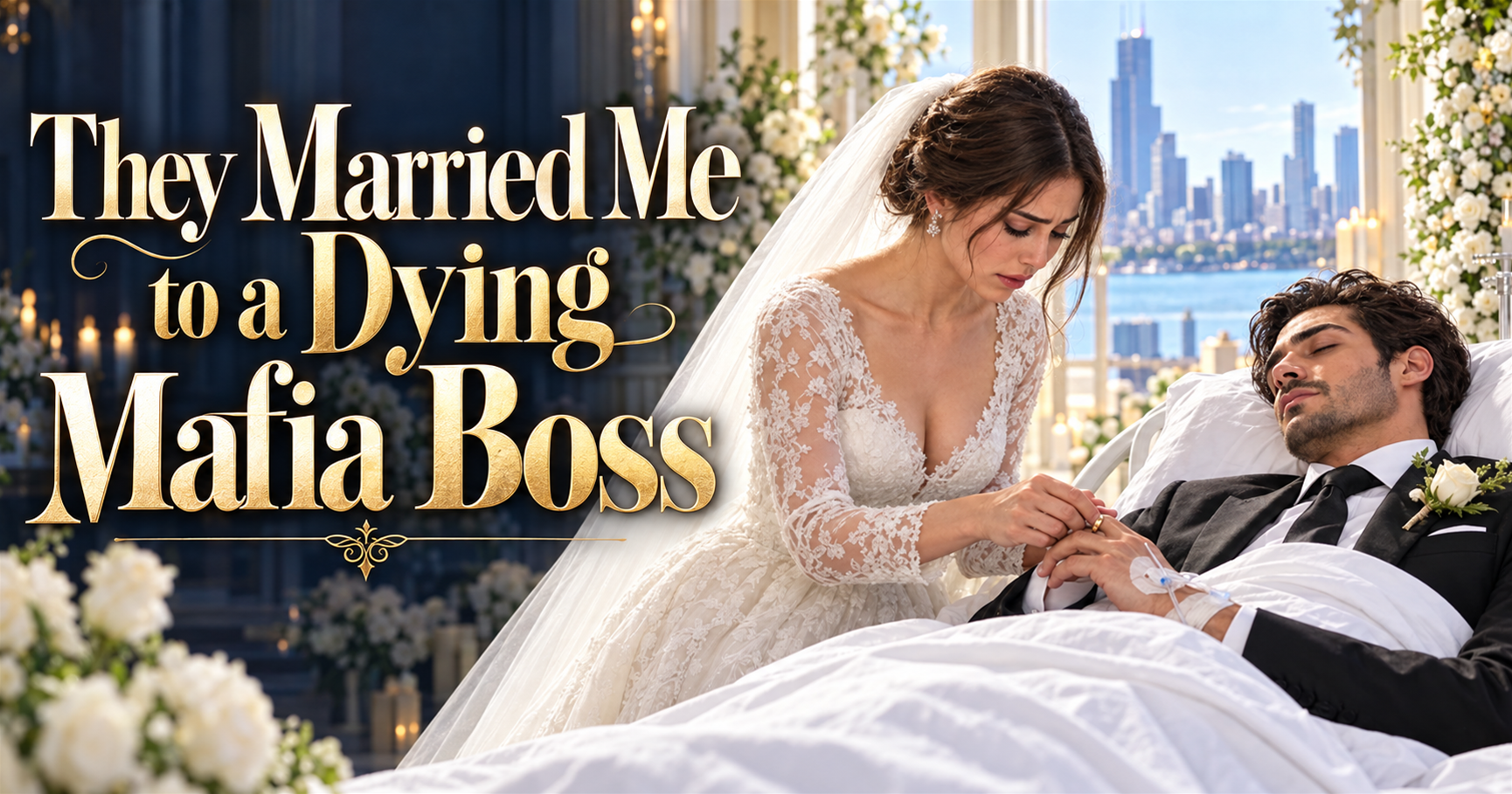
"They Married Me to a Dying Mafia Boss" Chapter 11 — This Time, I Choose You
Chapter 11 — This Time, I Choose You
The letter arrived on a Tuesday.
I was standing in my apartment kitchen, eating toast over the sink, when I opened it.
The formal findings cleared me of the medication misconduct that had ended my career.
I read the sentence three times.
Then I sat on the floor because my knees had stopped cooperating.
My phone was on the counter.
For several minutes, I couldn’t reach it.
There was no sudden return of the woman I had been before Martin Shaw died.
I was still thirty years old. Still paying off debts. Still living in an apartment with a radiator that knocked whenever the temperature dropped.
But the accusation was no longer waiting in every room ahead of me.
I called Miriam first.
She explained the remaining steps toward reinstatement, the applications, the training I would need to refresh.
I wrote them down.
Then I called Adrian.
He answered with, “You’re early.”
We usually spoke after my shift.
“It came.”
He went quiet.
“The letter?”
“Yes.”
“What does it say?”
I read the finding aloud.
Halfway through, I started crying again.
Adrian let me finish.
Then he said, “May I come over?”
I looked at the toast on the floor beside me.
“Yes.”
He arrived an hour later with a cane, a hired driver waiting downstairs, and a grocery bag containing soup.
“You brought soup?”
“You said you’d been eating toast.”
“Was that before or after I read the most important letter of my life?”
“Before.”
“You remember the strangest things.”
“I remember when you don’t eat.”
I stepped aside so he could enter.
He moved slowly, choosing where to place his feet. Some days were better than others. That day, crossing my small kitchen took effort.
I waited.
When he reached me, he set down the bag.
Then he put his arms around me.
I pressed my face against his shirt.
“I thought I’d feel like I did before.”
“How do you feel?”
“Like they finally stopped following me.”
He held me tighter.
“That’s enough for today.”
Reinstatement took work.
I completed the required reviews and refresher training. I practiced skills I had once performed without thinking. I interviewed at a hospital where nobody knew me as the nurse from the old headline.
They knew about the case.
They also knew how it had ended.
The first time I put on scrubs again, I stood in front of my bathroom mirror until I was almost late.
My badge said Nora Bennett.
Registered Nurse.
I took a photograph and sent it to my mother’s care team so they could show her.
That afternoon, she recognized me before I said a word.
“There’s my girl.”
I knelt beside her chair.
“Hi, Mom.”
She touched the badge.
“You worked hard for that.”
“Yes.”
“I’m proud of you.”
I carried those words through every difficult shift that followed.
ADVERTISEMENT
The cases against Julian and Harlan took longer.
I attended hearings when I was needed. Sometimes I sat beside Adrian. Sometimes we arrived separately because my work and his rehabilitation refused to arrange themselves around the court calendar.
The evidence established what our suspicions alone never could.
Julian had directed the unauthorized work connected to Adrian’s crash and then used his incapacity to move money and consolidate control. The man who arranged the work testified, and the records supported his account.
Harlan’s treatment decisions and false documentation had helped conceal Adrian’s responses and suppress further assessment.
The old hospital case revealed a familiar pattern: altered records, pressure on staff, and a convenient nurse left carrying the blame.
Both men were convicted.
Neither conviction returned the months Adrian had lost or the years taken from me.
But Julian could no longer call my mother’s facility and decide whether she stayed.
Harlan could no longer walk into a room and have his explanation become the truth because everyone else was afraid to question it.
Adrian’s own case did not disappear inside theirs.
He admitted financial offenses, paid penalties and restitution, and accepted a sentence that included supervision and restrictions on his business involvement.
Several ventures were sold. Others closed. The legitimate freight operations continued under independent management.
There were people who called that a humiliation.
I watched him sign documents he once would have ordered someone else to handle.
He called it overdue.
We did not move in together.
For a while, we went to dinner on Thursdays.
Then we added Sunday mornings.
He learned where I kept the coffee. I learned that he became intolerable when he pretended his leg wasn’t hurting.
We argued about ordinary things.
Once, he sent someone to replace my unreliable radiator without asking.
I sent the person away.
Adrian apologized and asked whether I wanted help finding a repair company.
I said yes.
It took him less time to learn than I had expected.
It took me longer to believe he would keep learning.
One evening, after a difficult shift, I found him outside my apartment with takeout and no driver in sight.
“Where’s the car?”
“Around the corner.”
“Why?”
“I thought you might prefer not to have someone watching your front door.”
I looked at him.
Then I unlocked it.
A year after I moved out, I asked him to come with me to the chapel.
He stopped halfway through buttoning his coat.
“The chapel?”
“Yes.”
“We can go somewhere else.”
“I know.”
He watched me for a moment.
“Are you sure?”
“I’m sure I want to go.”
Inside, the room looked smaller than I remembered.
Without the rows of guests, the flowers, the camera equipment, it was simply a quiet space with wooden pews and a view of the lake.
I stood where I had stood in my nineteen-dollar dress.
Adrian stayed beside me.
ADVERTISEMENT
He leaned on his cane.
I looked at his hand.
The gold ring was gone. He had removed it when the lawyers finished resolving the first ceremony and its paperwork.
“I hated this room,” I said.
“I know.”
“I hated how everybody looked at us.”
His jaw tightened.
“So did I.”
I turned toward him.
“I don’t anymore.”
He waited.
“I remember what happened here. I’m always going to remember. But I also remember deciding that I wouldn’t let them make me cruel.”
He took my hand.
“You kept that promise.”
“I want to make another one.”
His expression changed.
I felt my courage wobble, then settle.
“Adrian, I want to marry you.”
He stared at me.
Then he looked toward the empty pews, as though somebody might be hiding there with an explanation.
I laughed.
“It’s just me.”
“I can see that.”
“Then answer me.”
He set his cane against the pew and held both my hands.
“Yes.”
His voice was steady.
“Yes, Nora.”
Six weeks later, we returned.
My mother wore the blue cardigan with a small arrangement of flowers pinned to it. Briggs sat beside her. Reyes came directly from the hospital, and Miriam pretended she hadn’t cried when she saw my dress.
Tess attended too.
We had spoken several times by then.
Forgiveness had not arrived all at once. Trust would take longer.
But she had told the truth when it finally mattered, and I wanted her to see what came afterward.
There were no business associates filling the pews.
No lawyer standing beside the minister with an explanation for the groom’s silence.
Adrian stood facing me.
His cane rested within reach.
I wore a simple ivory dress that I had chosen, paid for, and kept a receipt for because some habits refused to become poetic.
When it was time for the vows, Adrian looked at me.
“I remember your first promise.”
“That you wouldn’t help them laugh at me?”
I nodded.
“I heard you,” he said. “I couldn’t tell you then.”
His thumb brushed the side of my hand.
“I can tell you now. Thank you.”
My eyes filled.
“You’re welcome.”
“And I promise you’ll never have to earn a place beside me by keeping quiet.”
I took a breath.
“I promise I’ll tell you when I’m afraid, when I’m angry, and when I need you.”
A smile touched his mouth.
“I’m counting on the angry part.”
“You should.”
Someone laughed softly behind us.
This time, the sound didn’t hurt.
The minister asked Adrian the question nobody had allowed him to answer before.
He said yes.
Then she turned to me.
I looked at the man standing in front of me.
I had my own home. My own work. My mother was safe.
If I walked out, all of those things would still be mine.
I stayed.
“Yes,” I said.
And Adrian kissed me only after I leaned toward him.
ADVERTISEMENT
You May Also Like
-
CompletedChapter 10

Her Family Stole My Father’s Legacy. I Bought Theirs
Victoria Delacroix slapped me in front of thirty wealthy guests and ordered security to throw me out. She thought I didn’t belong in her family’s luxury boutique. She didn’t know I already controlled the company. One phone call ended her evening. An old sketchbook changed everything I thought I knew about my father. He was a Black tailor from Queens who died believing his greatest opportunity had ended in failure. But the designs that made the Delacroix name famous carried his handwriting. Her family had taken his work, denied him payment, and erased his name. Now her father was offering me two million dollars to keep it that way. He should have asked what I wanted before putting a price on my silence.Human Nature|Glow-Up9.8k words5 0 -
CompletedChapter 11
I Owned the Hotel That Turned My Daughter Away
Ethan Vance arrives at a luxury hotel carrying his sleeping daughter and a crushed bouquet of roses for his late wife. The receptionists see his wet jacket and decide he doesn’t belong. They refuse to help. They dismiss the housekeeper who offers his daughter a blanket. They have no idea he owns the hotel. One phone call exposes their mistake. But before Ethan can take his daughter upstairs, the manager produces an envelope in his dead wife’s handwriting—addressed to Ethan and the housekeeper he has just met. He came to remember the woman he loved. Now he must discover the part of her life she never shared.Billionaire|Human Nature|Dark Secrets11.7k words5 0 -
CompletedChapter 10
They Thought I Couldn’t Afford to Quit.
For nine years, Catherine “Cat” Bennett kept the clients happy, the projects moving, and her shrinking team afloat. Then HR offered her a sixty percent pay cut. Same accounts. Same responsibilities. Less than half the salary. Her boss knew she was a single mother. He knew she had a mortgage and a son who needed asthma medication. He expected her to sign. Cat cried in her car instead. Then a former colleague called. Their biggest competitor had been trying to recruit her for years—and its CEO wanted a meeting. By the time Cat returned to give HR her answer, she had a signed offer in her bag. Her boss had prepared for an employee who couldn’t afford to leave. He hadn’t prepared for what losing her would cost.Dark Humor|Human Nature|Age Gap9.7k words5 5 -
CompletedChapter 10
The Barefoot Boy Who Helped My Daughter Stand.
For three years, Nathaniel Hayes has searched for a way to help his daughter walk again. Then, at an elegant family celebration, nine-year-old Lily takes the hand of a barefoot boy—and rises from her wheelchair. Nathaniel is stunned. Lily’s grandfather wants the boy removed. But ten-year-old Noah Bennett hasn’t come looking for money or a miracle. He recognizes something in Lily that the adults around her haven’t understood. As an unlikely friendship brings laughter back into the house, Lily begins talking about the accident that killed her mother. And someone in the family has a reason to wish she’d stayed silent.Billionaire|Human Nature|Dark Secrets10.2k words5 6 -
CompletedChapter 10
The Man I Kept in Chains Came Back for Me.
Julian Ashford once had enough money to keep Adrian Mercer in chains—and too little understanding of love to know why he wanted him to stay. Then Adrian destroyed his family’s fortune and waited for the spoiled young heir to come begging. Julian never did. Five years later, Julian delivers food through freezing rain, counts every dollar, and avoids the powerful man who ruined him. Adrian says he hates him. Julian believes him. But hatred doesn’t explain the car that follows him everywhere. The familiar candy beside his medicine. Or why Adrian keeps reaching for him after telling him to leave. Julian wants to call it even and move on. Then another man kisses him. That night, Adrian appears outside his door.Human Nature|Healing Romance|HE6.8k words5 0 -
CompletedChapter 11
The Dancer They Paid to Humiliate
Emily Carter was hired to dance at a billionaire's charity gala. Instead, she became the evening's biggest joke. As wealthy socialites mocked her curves and laughed behind champagne glasses, Emily refused to stop dancing. But when a mysterious necklace slipped from her dress, billionaire Alexander Whitmore suddenly rose from his chair and shouted, "STOP THE MUSIC!" That necklace belonged to a Whitmore heiress who vanished decades ago. Now, the woman everyone humiliated may hold the key to...Billionaire|Human Nature|Dark Secrets|Plot Twist|Glow-Up12.3k words5 8 -
CompletedChapter 124
I Died on My Wedding Night. My Enemy’s Hair Turned White.
I loved Julian Whitmore for nineteen years. On the night we made our marriage official, he murdered me for the heart beating in my chest. Death should have ended the betrayal. Instead, I became a ghost, forced to watch my husband play the grieving widower while my family helped bury the truth. I could see everything. Prove nothing. Touch no one. Then Lucian Blackwood began looking for me. My ruthless business rival. The man I had spent years fighting. The last person I expected to care whether I lived or died. While the people I loved profited from my disappearance, he refused to stop searching. And every secret I uncovered about him made my wasted life hurt more. I wanted revenge. I wanted my mother safe. But the closer Lucian came to the truth, the more frightened I became of what finding me would cost him.Human Nature|Dark Secrets82.6k words5 17 -
CompletedChapter 10
The Woman They Shouldn’t Have Slapped
Vivian Whitmore looked at the elegant Black woman standing in her father’s boardroom and decided she didn’t belong. First came the questions. Then the insults. Then Vivian slapped her in front of everyone. Amina Diop didn’t slap her back. She picked up her phone. “Hold tomorrow’s funding release.” Vivian had no idea she had just struck the founder of Diop Capital—the firm her family’s company desperately needed. But Amina had come to that meeting with questions of her own. Millions of dollars were unaccounted for. Someone had been approving payments for work nobody could produce. And the man standing beside Vivian had just recognized her. He looked terrified. Not because of the slap.Human Nature|Dark Secrets7.6k words5 207 -
CompletedChapter 5
The Heiress in an Apron
Three drops of champagne. One shove. A hundred guests who did nothing. Ella Bennett is helping serve drinks at an elegant English wedding when a wealthy guest pushes her into a fountain—and demands that she be fired. Soaked and bleeding, Ella asks for an apology. Instead, she gets laughter. Then the estate manager asks whether she wants him to end the reception. A powerful hotel executive arrives at her request. And the woman who humiliated her calls her father for help—only to hear one chilling question: “Victoria. What did you do?” Everyone wants to know who the waitress really is. Before the night is over, they’ll wish they had asked sooner.Human Nature|Dark Secrets|Glow-Up4.8k words5 9 -
CompletedChapter 9
THE BOY WHO WOULDN'T KNEEL
When two armed men storm a supermarket, everyone gets down. Ten-year-old Noah Bennett stays standing. “You’ve got thirty seconds to leave.” The gunman laughs—until the security shutter starts to fall. Then he finds the scar behind Noah’s ear and recognizes whose son he is. Six months ago, Noah buried his father. Tonight, someone is watching through the supermarket cameras. Someone who knows the gunman’s name. As the exits close, Noah realizes this was never a robbery gone wrong. And he may be the reason it happened.Human Nature|Survival|Dark Secrets8.9k words5 10